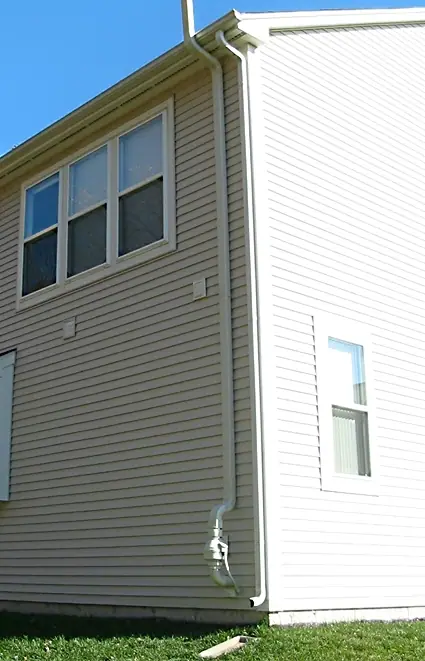
What you can safely do yourself
Testing: absolutely. A do-it-yourself test kit is designed for homeowners, costs little, and gives you a lab result. Follow the closed-house instructions and place it in the lowest lived-in level. See our test results guide.
Checking an existing system: also yes. Reading the manometer, keeping the exhaust clear and retesting every two years are homeowner jobs. See radon fan care.
Sealing cracks: worth doing, but not as a fix on its own. The EPA does not recommend sealing alone to reduce radon, because it's hard to find and close every opening and new cracks form as concrete ages. Sealing helps a fan-powered system work better.
What a full install involves
If you're considering installing an active sub-slab system yourself, here's the honest list of tasks:
- Choosing a suction point and coring a hole (often around 5 inches) through the slab without hitting plumbing, wiring, radiant heat tubing or post-tension cables.
- Digging out a small pit of soil or gravel under the slab.
- Running sealed Schedule 40 PVC pipe, sloped so condensation drains back down, through the house or up an outside wall.
- Mounting a fan rated for radon (not a general duct fan) outside the living space, such as in the attic or on the exterior.
- Wiring the fan, which may need an electrical permit and an outdoor-rated disconnect.
- Discharging the exhaust above the roof edge and away from windows, doors and other openings, as the ANSI/AARST standard for existing homes requires.
- Sealing the sump, cracks and floor-wall joints, fitting a manometer and labeling the system.
- Checking that furnace and water heater flues still draft properly, then running a follow-up radon test.
None of these steps is exotic. Getting all of them right on the first try, with the right fan for your soil, is the hard part.
Where DIY systems usually go wrong
- Wrong fan size. Too weak and suction doesn't reach the whole slab; too strong and you pay for more electricity and noise than you need. Pros pick a fan after checking how air moves under the floor.
- Exhaust in the wrong place. Venting at ground level, under a deck or near a window can let radon back into the house or onto a patio.
- Fan inside the living space. The section of pipe after the fan is under positive pressure. If it leaks indoors, it can push radon into the house.
- No slope, no drainage. Condensation pools and can damage the fan or block the pipe in winter.
- Skipping the follow-up test. Without one, you don't know whether it worked.
The Kansas rules
Kansas requires KDHE certification for anyone who performs radon measurement or mitigation for someone else. The rule is aimed at people doing the work for others, such as contractors and inspectors. If you're planning to install a system in your own home, check current KDHE guidance and ask your city about electrical or roofing permits. This is general information, not legal advice; our Kansas radon rules guide has more.
Selling later
When a home with a radon system goes on the market, buyers and their inspectors often ask who installed it and whether it was tested afterward. A system installed by a KDHE-certified professional, with paperwork and a post-mitigation test, tends to raise fewer questions than a homemade one. If you DIY, keep notes, photos and your test results.
Cost: DIY vs pro
Parts for a simple single-suction-point system (fan, pipe, fittings, sealant, manometer) are a fraction of a professional price, but tool rental, permits and your time add up. Our estimate of the typical professional price for a standard Wichita-area system is about $800 to $1,500; see the cost guide. Many homeowners decide the design, warranty and documentation are worth the difference.
A simple way to decide
| Your situation | Usually the better fit |
|---|---|
| Simple basement or slab, you're experienced with tools and wiring, no sale planned | DIY is possible if you follow the standard closely |
| Crawl space, multiple foundations, or finished basement | Professional |
| Buying or selling, or on a deadline | Professional with documentation |
| Very high result (for example, several times the action level) | Professional, with diagnostics |
Want a professional price to compare? Request a quote from a KDHE-certified Wichita-area installer.
Sources: U.S. EPA, Consumer's Guide to Radon Reduction and A Citizen's Guide to Radon; ANSI/AARST soil gas mitigation standard for existing homes; KDHE Radon Program. Cost figures are our estimates.
Common questions
Can I use a regular bathroom or duct fan for radon?
It is not recommended. Radon fans are sealed and rated for continuous outdoor or attic use with damp soil gas. A general duct fan can leak and fail early.
Is sealing my basement cracks enough to lower radon?
Usually not. The EPA does not recommend sealing alone. It helps an active system work better, but radon finds other openings.
If I install my own system, should I still test?
Yes. Test between 24 hours and 30 days after the fan starts, then every two years. That is the only way to know it is working.