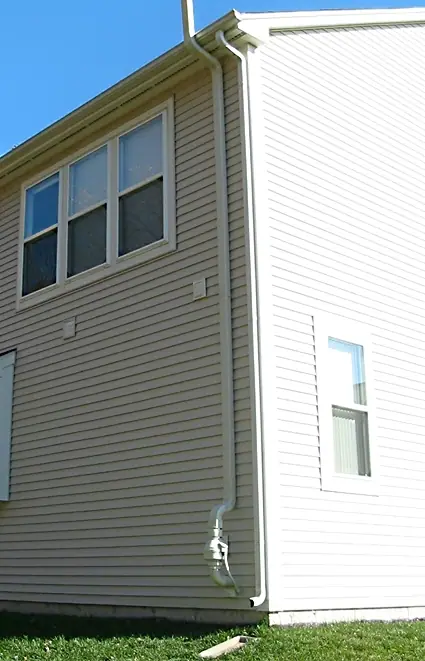
Park City runs along I-135 on Wichita's north side. Its housing ranges from older single-story homes on slabs or crawl spaces to newer houses with basements. If your home sits over a crawl space, the radon fix is a little different from the standard basement system, and it's worth understanding before you compare quotes.
How radon gets into a crawl space home
In a crawl space, the soil is exposed under the house. Soil gas collects in the crawl space and is drawn up into the living space through gaps around pipes, ducts and wiring, especially in winter when warm air rises and leaks out of the top of the house. If your furnace ducts or air handler sit in the crawl space, leaks in that ductwork can pull crawl space air straight into the house.
The fix: a sealed membrane system
The EPA-recognized approach for crawl spaces is sub-membrane depressurization:
- A heavy plastic membrane is laid over the exposed soil and sealed at the seams and up the foundation walls.
- A perforated pipe or suction point is placed under the membrane.
- A PVC pipe connects it to a fan that pulls soil gas from under the plastic and vents it above the roof.
Because it involves more material and work in a tight space, a crawl space system usually costs more than a basic slab or basement system. Our estimate of the typical range is roughly $1,200 to $2,500 or more, depending on the size and access. See the cost guide.
What to ask about a crawl space quote
- How thick is the membrane, and will it be sealed to the walls and piers?
- Can the membrane take foot traffic if you need to service plumbing or ductwork later?
- Will the installer seal the crawl space vents, or leave them open? (They should explain why.)
- Where will the fan and exhaust go?
- Is a follow-up test included?
Mixed foundations
Some Park City homes have a basement or slab under the original house and a crawl space under an addition. Each area may need its own suction, connected to one fan. Mention all foundation types when you request a quote.
Testing first
Test in the lowest lived-in level. For a crawl space home, that's the main floor. Keep the test kit away from heating vents. If you're unsure about the result, our test results guide explains short-term and long-term tests.
Request a quote with your foundation type, and one KDHE-certified professional serving Park City will contact you.
Common questions
Can I just ventilate my crawl space instead?
Increasing ventilation can lower radon a little in some homes, but results are unreliable and it can cause cold floors and frozen pipes in winter. A sealed membrane system is the standard, more dependable fix.
Will the membrane cause moisture problems?
A properly installed membrane usually reduces moisture in the crawl space, because it covers damp soil. Ask the installer how they handle any standing water or existing moisture issues first.
How long does a crawl space install take?
Often a full day, sometimes more for large or hard-to-reach crawl spaces. Basement and slab systems are often quicker.