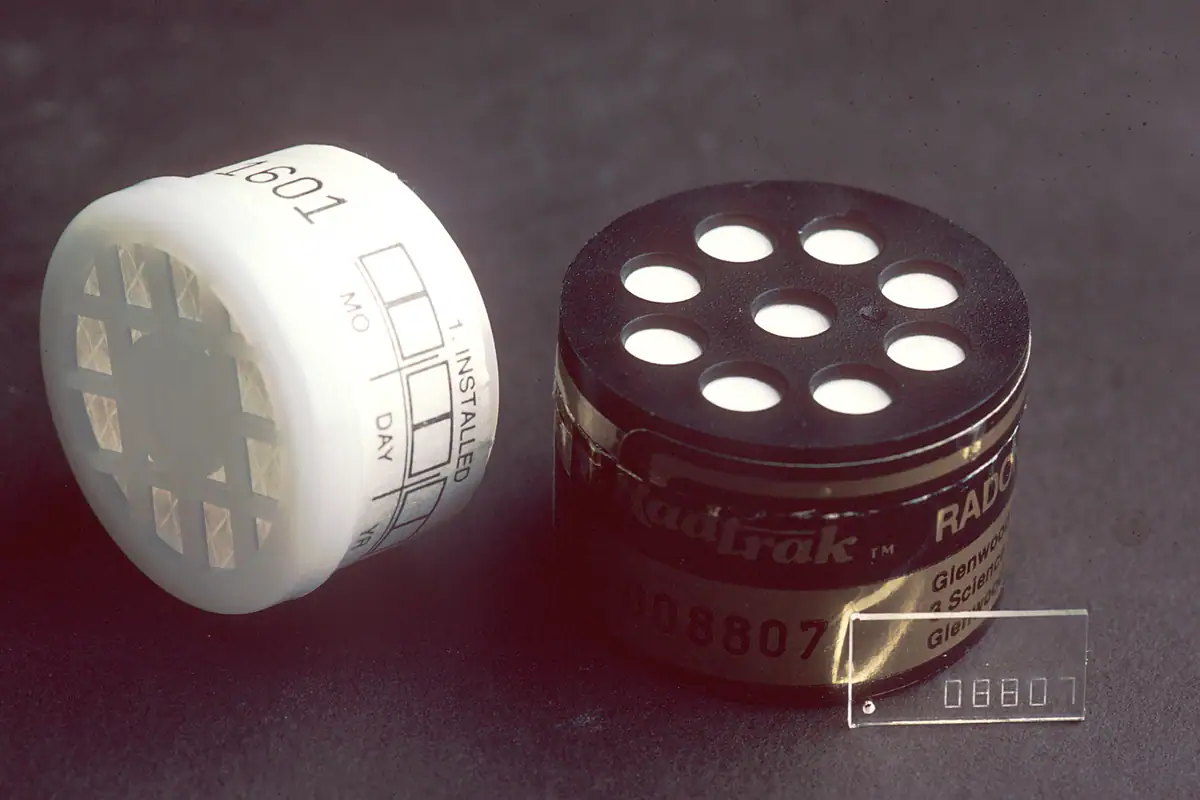
What "pCi/L" means
Radon results in the U.S. are reported in picocuries per liter of air (pCi/L), a measure of how much radioactive decay is happening in the air. Some monitors also show Bq/m³ (becquerels per cubic meter); 4 pCi/L is about 148 Bq/m³. The national average indoor level is about 1.3 pCi/L, and outdoor air averages about 0.4 pCi/L, according to the EPA.
The EPA's guidance by level
| Result | EPA guidance |
|---|---|
| Below 2 pCi/L | No action recommended. Retest every few years and after major changes to the house. |
| 2 to 3.9 pCi/L | Consider fixing. There is no known safe level of radon, and the EPA suggests considering mitigation in this range. |
| 4 pCi/L or higher | Fix the home. 4 pCi/L is the EPA action level. |
Short-term vs long-term tests
A short-term test runs 2 to 90 days (most kits are 2 to 7 days). It's quick, but radon goes up and down with weather, season and how the house is used, so one short test is a snapshot. A long-term test runs more than 90 days and gives a better estimate of your year-round average.
The EPA's approach for a short-term result of 4 pCi/L or higher is to confirm it before deciding:
- If you want a quick answer, do a second short-term test. If the average of the two is 4 or more, fix the home.
- If you have time, do a long-term test. If it's 4 or more, fix the home.
- If the first short-term result was very high (for example, several times the action level), it's sensible to act sooner rather than wait months for a long-term test.
For home sales, a continuous radon monitor run by a certified professional is common, because it records hourly readings and can show if the test was disturbed.
Why results vary
- Season: closed-house winter conditions often read higher than summer.
- Weather: wind, storms and falling air pressure can push levels up temporarily.
- Location in the house: the lowest lived-in level usually reads highest.
- Test conditions: open windows, fans blowing on the kit, or placing it near a sump or drain all skew results.
Reading a test after mitigation
After a system is installed, the EPA recommends a short-term test no sooner than 24 hours and no later than 30 days after the fan starts. A well-designed sub-slab system usually brings levels well below 4 pCi/L. Then retest every two years, and after major renovations or changes to heating and cooling.
Where to get a test in Wichita
K-State Research and Extension county offices, including Sedgwick County's, sell low-cost kits, and kits are also sold in hardware stores and online. A KDHE-certified measurement professional can run a continuous monitor test for you. See our radon testing page for the options.
Have a result of 4 or higher? Request a mitigation quote.
Common questions
My two tests disagree. Which one is right?
Both are snapshots of a level that changes over time. For the EPA approach, average two short-term tests, or rely on a long-term test of more than 90 days for the best estimate of your yearly average.
Does a high upstairs reading matter if the basement is low?
It is unusual, since the lowest level usually reads highest. Check the test conditions, such as a kit near a vent or window, and retest. If it is confirmed, a radon professional can investigate.
How soon after a high result should I act?
Radon risk comes from long-term exposure, so a few weeks to confirm and get quotes is reasonable. If the result was very high, there is good reason not to delay.