1. Confirm KDHE certification
Under the Kansas Radon Certification Law, in effect since 2011, anyone who performs radon testing or mitigation for someone else in Kansas must be certified by the Kansas Department of Health and Environment. Certification is in separate categories (measurement, mitigation, laboratory), so a home inspector certified for testing isn't automatically certified to install systems. Ask for the mitigation certification number and check it against the list of certified professionals published through the Kansas Radon Program (a KDHE and Kansas State University partnership).
Many installers also hold national certification through the National Radon Proficiency Program (NRPP) or the National Radon Safety Board (NRSB). That's a good sign, but in Kansas it doesn't replace KDHE certification.
2. Ask the right questions
- Which standard do you install to? The industry standard for existing homes is ANSI/AARST SGM-SF (Soil Gas Mitigation Standards for Existing Homes). A good contractor will name it without hesitation.
- Will you test sub-slab airflow? A quick "pressure field extension" or diagnostic test shows how well suction spreads under the floor and whether one suction point is enough.
- Which fan, and why? The fan model should match your soil and house. Ask for it by name so you can check its wattage and warranty.
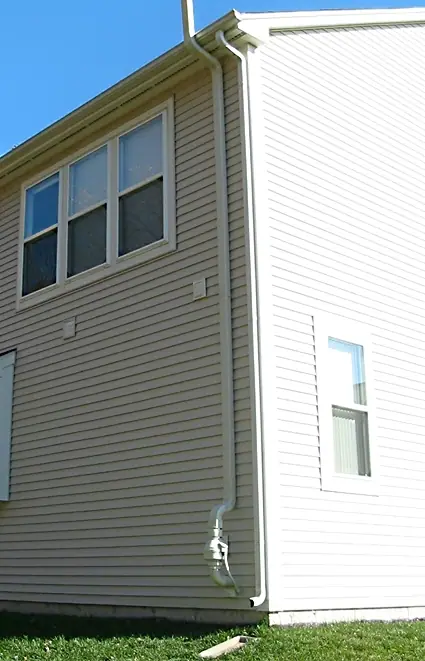
- Where will the pipe go and where will it exhaust? The exhaust should discharge above the roof edge and away from windows and openings, as the standard requires.
- Is a follow-up test included? The EPA recommends testing within 30 days after the system starts. Some contractors include it; some charge separately.
- What if levels are still above 4 pCi/L? Look for a written promise to adjust the system at no extra charge.
- What do the warranties cover? There are usually two: the fan manufacturer's warranty and the installer's workmanship warranty.
3. What a good written quote includes
A quote you can compare should list the number and location of suction points, the pipe route, fan model and location, exhaust location, sealing work (sump lid, cracks, floor drains), electrical work, permits if needed, the post-mitigation test, warranties, and the total price. Vague quotes ("install radon system, $X") make comparisons impossible.
4. Red flags
- No KDHE certification number, or reluctance to share it.
- Pressure to sign the same day, or scare tactics about health.
- Offering to "just seal cracks" as the whole fix. The EPA doesn't recommend sealing alone.
- Exhausting radon at ground level or under a window or deck.
- No manometer (pressure gauge) on the pipe.
- No mention of a follow-up test.
5. Testers and installers: watch for conflicts
When a radon test is part of a home sale, the EPA has historically advised being cautious when the same company that performs the test also sells the fix. It isn't forbidden, but an independent test or a second opinion is reasonable if the stakes are high. After any install, a test by an independent certified measurement professional gives everyone confidence.
How we choose who to refer
When you use this site, we pass your request to one independent professional who holds current KDHE certification, carries liability insurance, installs to the current ANSI/AARST standard and gives written quotes. Still, check the certification yourself; it takes a minute. Request a quote when you're ready.
Common questions
How many quotes should I get?
Two or three is plenty for most homes. Compare what is included, not just the price: suction points, fan model, sealing, the follow-up test and warranties.
Is NRPP certification enough in Kansas?
No. National certification through NRPP or NRSB is a good sign, but Kansas law requires KDHE certification for anyone who mitigates radon for someone else in the state.
Should the installer visit before quoting?
For an accurate price, yes, or at least review photos of the foundation, sump and possible pipe routes. A price given without any look at the house may change on install day.