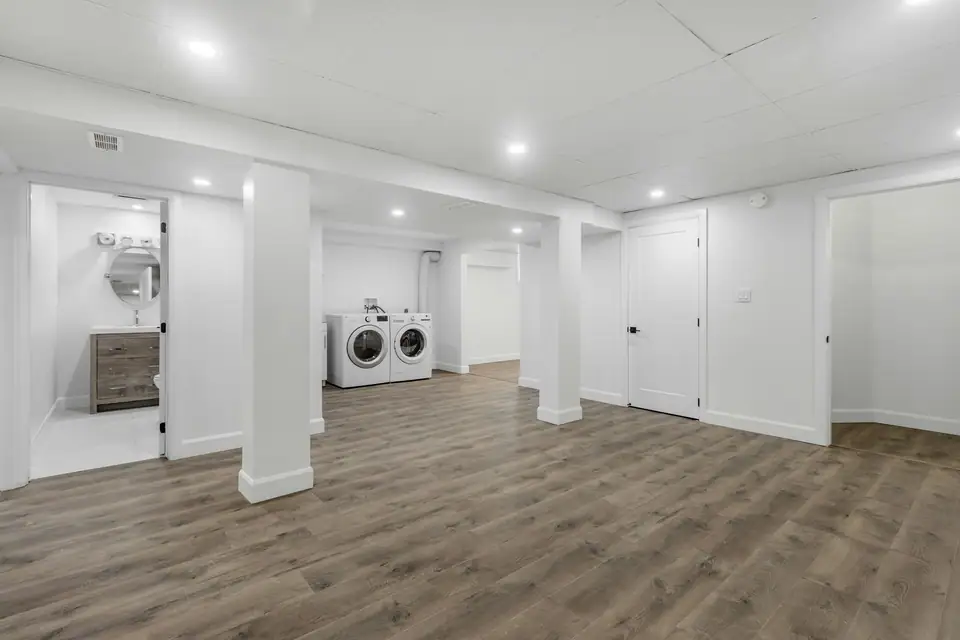
Sub-slab depressurization: the standard fix
Radon gets into a home because the air pressure inside is slightly lower than in the soil underneath, especially when the furnace runs and warm air rises. That pressure difference draws soil gas in through any opening.
A sub-slab depressurization system flips that around. A fan connected to a pipe under the slab keeps the soil underneath at lower pressure than the house, so radon is pulled into the pipe and vented outside instead of seeping into your rooms. It is the method the EPA describes as most common for homes with basements or slab foundations.
What the installer does
- Diagnostics. Many installers test how easily air moves under the slab (called pressure field extension) to decide how many suction points are needed and which fan to use.
- Suction point. A hole is cored through the slab, and soil is removed to create a small pit that helps air move.
- Piping. Schedule 40 PVC pipe runs from the suction point up through the house (often a closet or garage) or up an exterior wall.
- Fan. The radon fan is mounted outside the living space, in the attic, garage or on the exterior, so the pressurized part of the pipe isn't inside your home.
- Sealing. Accessible cracks, floor-wall joints and the sump pit are sealed so the system pulls from under the slab efficiently.
- Exhaust. The pipe discharges above the roof edge and away from windows, doors and other openings, as the industry standard requires.
- Gauge and label. A manometer shows the system is drawing suction, and a label identifies the system and installer.
Other system types
Crawl spaces
Many Wichita-area homes have crawl spaces, alone or combined with a basement or slab. The usual fix is sub-membrane depressurization: a heavy plastic sheet is laid over the dirt floor and sealed to the walls, and the fan draws from beneath it.
Sump pits and drain tile
If your basement has a sump pit connected to drain tile, the installer may draw suction through a sealed sump lid, using the drain tile to reach under the slab.
Multiple foundations
Homes with additions often have a basement, a slab and a crawl space under different sections. These may need more than one suction point, which raises the cost.
Exterior or interior pipe?
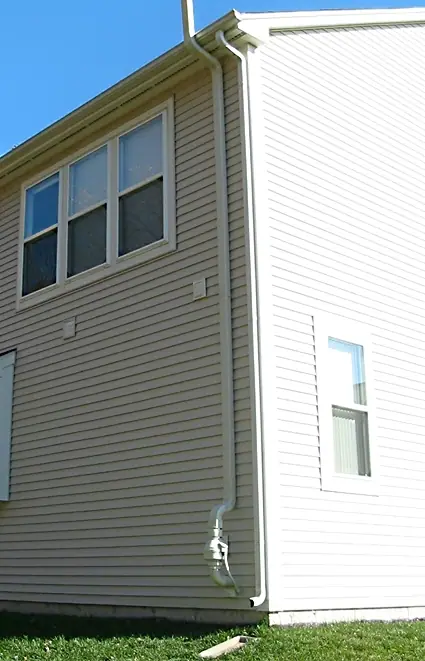
An exterior pipe up the side of the house is usually simpler and cheaper. An interior route through a closet and attic hides the pipe and keeps the fan in the attic, but takes more work. Your installer can explain the trade-offs for your house, including how a pipe looks on the outside and where the exhaust ends up.
After the install
- Do a follow-up radon test between 24 hours and 30 days after the system starts.
- Glance at the manometer now and then. If the liquid levels are even, the fan may have stopped.
- Retest every two years, as the EPA recommends, and after big renovations.
- Radon fans typically last many years, but they are not forever. Ask what the fan and workmanship warranties cover.
Request a mitigation quote from a KDHE-certified Wichita installer.
Sources: U.S. EPA, Consumer's Guide to Radon Reduction; ANSI/AARST soil gas mitigation standards for existing homes.